
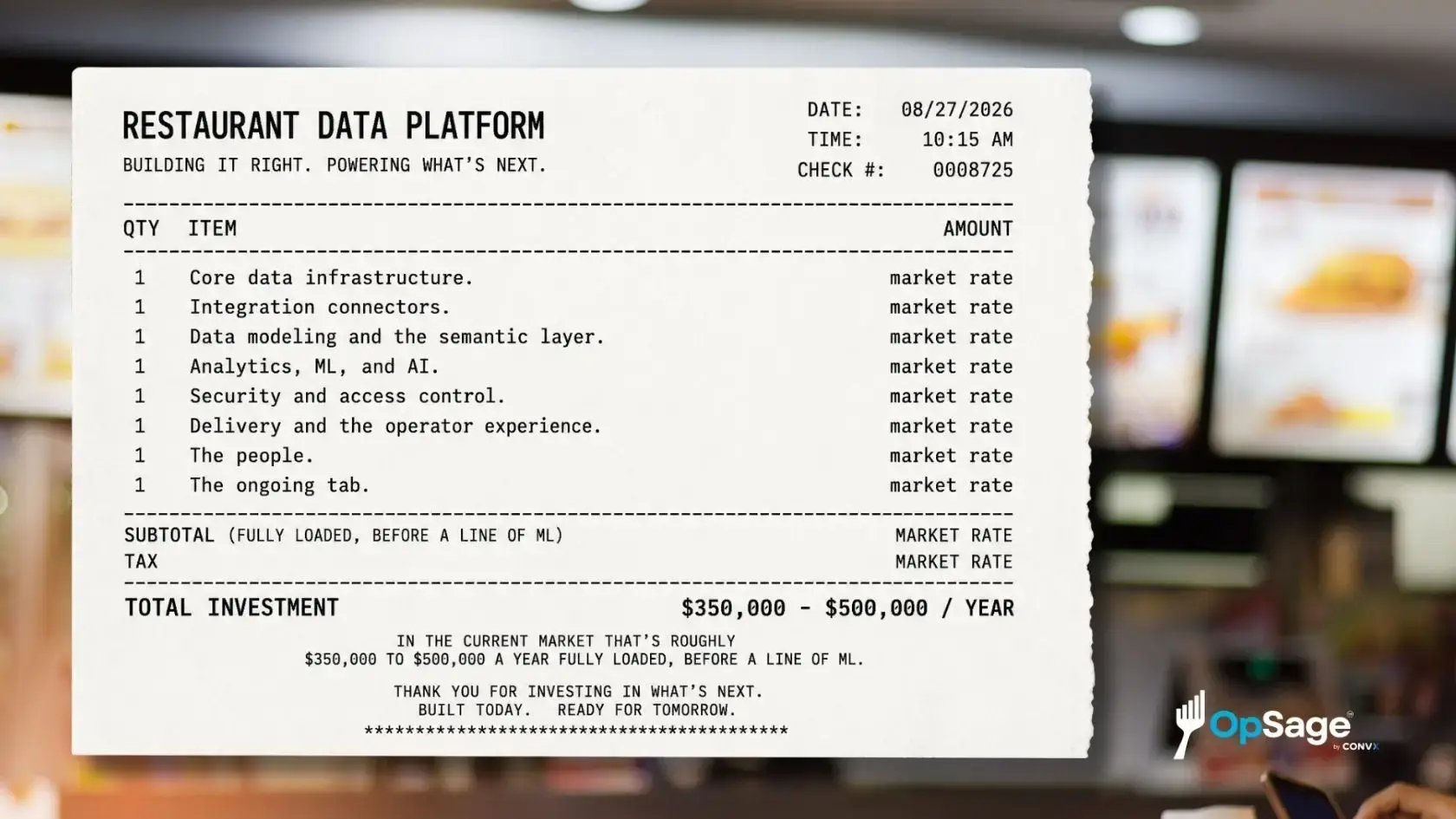
Trends
Restaurant Data Intelligence Platform
Custom Apps


There is a reset coming in AI, and honestly, it is overdue.
For the last two years, the market has been flooded with promises about agentic AI. Every platform seems to have an agent. Every workflow is suddenly autonomous. Every chatbot got a promotion and a new label.
But the cracks are starting to show.
Gartner predicts that more than 40% of agentic AI projects will be canceled by the end of 2027. That does not mean AI is failing. It means many projects were launched too early, sold too loosely, or built without the operational foundation required to deliver real business value.
In other words, the issue is not intelligence. It is infrastructure.
Gartner predicts more than 40% of agentic AI projects will be canceled by the end of 2027.
Only 7% of enterprises say their data is completely ready for AI adoption.
Most organizations still struggle with data preparation before AI can produce useful work.
Siloed data remains one of the biggest barriers to enterprise AI readiness.
The coming AI reset will expose the gap between experimentation and execution. Gartner recommends shifting the focus from individual task augmentation to enterprise productivity. In restaurants, that starts with a platform that can turn messy operational data into governed, usable intelligence.
That matters even more in restaurants, where data is notoriously fragmented across POS, labor, inventory, ordering, loyalty, guest feedback, accounting, and marketing systems.
If those systems are disconnected, inconsistent, or poorly governed, AI does not magically solve the problem. It usually amplifies it.
That is why the latest enterprise data-readiness findings hit so hard. Most organizations still are not ready. Siloed data remains one of the biggest blockers. Lack of strategy is another. So while the AI conversation keeps getting louder, the underlying data layer is still whispering for help.
And that is exactly where too many AI projects go sideways.
If a restaurant brand asks AI to explain a drop in weekday traffic, identify over-laboring stores, surface margin pressure, or forecast upcoming demand, the answer is only as good as the data model behind it. If definitions vary by source, if menu items are miscategorized, if labor records are not aligned with sales, or if review data sits off in a separate universe, the output may sound smart while being operationally flimsy.
That is not transformation. That is theater.
This is the part of the story that gets missed.
Most restaurant brands do not need another flashy assistant bolted onto disconnected systems. They need a foundation that unifies operational data, structures it correctly, governs access, and makes it usable for real-world decisions.
That is the value of a true Restaurant Data Platform.
Before AI can be useful at scale, restaurant data has to be cleaned, standardized, mapped, monitored, and made trustworthy. That means connecting the systems that already run the business and turning them into one consistent intelligence layer. It means creating shared definitions for metrics, categories, dayparts, regions, and roles. It means eliminating the chaos that makes reporting slow, inconsistent, and difficult to trust.
Once that foundation is in place, AI gets a lot more interesting.
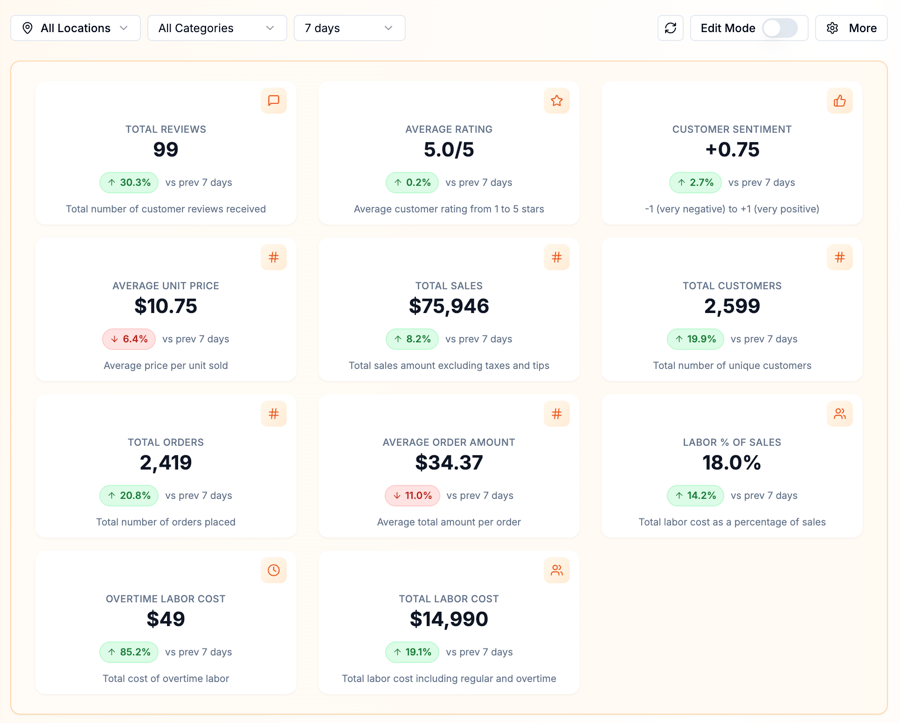
OpSage AI Assistant is built around a simple idea: restaurant AI should be grounded in clean, unified, governed operational data.
Instead of slapping a chatbot on top of scattered systems, OpSage creates a connected intelligence layer across the restaurant operation. It is designed to bring together sales, labor, reviews, weather, and other operational signals so AI can do something that actually matters: help teams make faster, smarter decisions with confidence.
That is a very different proposition from generic AI tools or traditional dashboard software.
It means operators can move from hindsight to foresight. It means anomalies can be surfaced before they become expensive. It means questions can be asked in plain language and answered in the context of real restaurant operations. It means the business can start shifting from disconnected reports and manual interpretation toward a more intelligent, role-aware, decision-ready system.
That is the lane OpSage is built for.
The coming AI correction is not bad news. It is healthy news.
It will force the market to separate novelty from usefulness. It will expose which platforms were built for demos and which were built for operations. It will challenge restaurant brands to stop asking, “Do we have an AI story?” and start asking, “Do we have the data foundation required to make AI valuable?”
That is a much better question.
Because the winners in the next phase of AI will not be the brands that experimented the hardest. They will be the brands that got their data house in order first.
They will be the ones that unified systems, created a trusted source of truth, and adopted AI in ways that improved enterprise productivity, not just individual tasks.
They will be the ones that treated AI as a layer built on top of operational discipline, not as a shortcut around it.
For restaurant leaders, the lesson is simple.
If your data is fragmented, your AI strategy is fragile.
If your reporting is inconsistent, your agents will be too.
If your systems do not talk to each other, your intelligence layer will always struggle to deliver real ROI.
But if your data is connected, governed, and structured correctly, AI starts to become far more than a buzzword. It becomes a practical advantage.
That is why the future belongs to brands that fix the data layer first.
And that is why the conversation around restaurant AI should start with infrastructure, not hype.
If you want to see how that foundation comes together, explore the Restaurant Data Platform, see how the OpSage AI Assistant turns restaurant data into usable answers, visit the FAQ, or Book a Demo to see it in action.