Trends
Restaurant Data Intelligence Platform
Custom Apps
.png?width=1120&height=630&name=blog%20header%20any%20ai%20(1).png)

I talk to a lot of independent and small-chain restaurant operators. And somewhere in almost every conversation, the same thing comes up.
They’re already using AI. ChatGPT to draft email replies, Claude to think through scheduling decisions, Gemini for who knows what. They like it. It’s fast. It’s useful for general stuff.
But then someone asks it a real question about their business — “Why is my food cost running 4 points high at the Westside location?” “Am I understaffed on Friday afternoons and is it affecting my reviews?” “How did sales mix shift after we dropped the lunch combo?” — and the AI can’t answer it.
It can’t answer it because it doesn’t know anything about their restaurants. It knows everything in general. It knows nothing specific.
General AI is the reasoning. OpSage is what it reasons over.
That’s the gap we built the OpSage Intelligence Layer to close. And I want to explain how it works in plain terms, because it’s not complicated once you understand the basic idea.

Here’s what I mean by that. When you open Claude or ChatGPT and type a question, those tools are drawing on everything they were trained on — the internet, research, documents, patterns across millions of topics. They’re genuinely impressive.
But they have no idea:
That context doesn’t exist in those tools because no one has given it to them. They’re reasoning engines sitting on top of nothing.
OpSage is what you give them to reason over.
OpSage connects your operational systems — your POS, your labor platform, your inventory system, your guest reviews — and builds a structured, restaurant-aware intelligence model on top of all of it. That’s the core of what our platform has done since day one.
What the Intelligence Layer does is expose that intelligence through a standard called MCP (Model Context Protocol). In plain English: it lets the AI tools your team already uses — Claude, ChatGPT, Gemini, Microsoft Copilot — pull live, accurate, permission-controlled data about your restaurants and actually reason over it.
Same AI. Same interface your team is already comfortable with. Now it knows your restaurants.
When you ask it “Why did sales drop 18% at location #4 last Tuesday?” it can actually answer. Not with a generic framework. With your data, your context, your history.
The questions it answers are the ones no single system in your operation can answer on its own, because the answer lives across multiple systems at once: sales, labor, reviews, weather, inventory. OpSage pulls those together and makes them available to whatever AI client your team is sitting in.
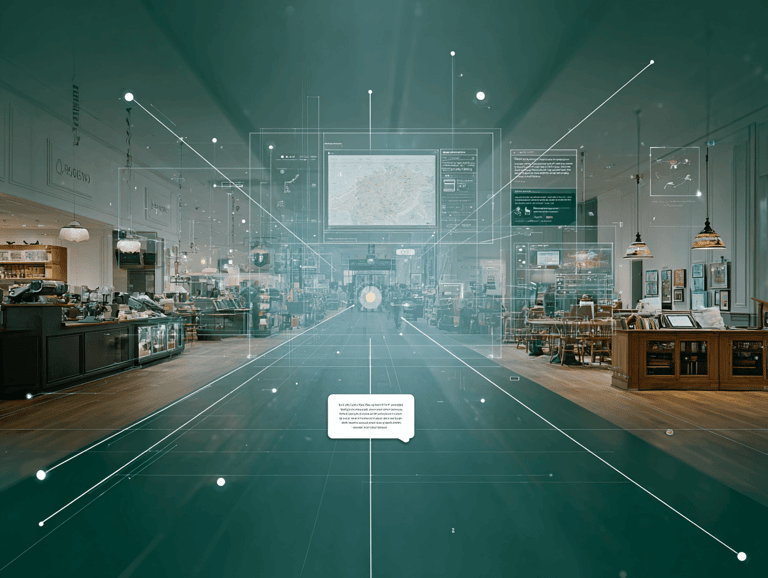
OpSage has always shipped as a full-stack application: dashboards, AI Chat, the Daily Briefing, Business Reports, anomaly alerts. If you want an AI analyst your team logs into, that’s the OpSage Application, and it’s built for exactly the kind of operator I described above.
The Intelligence Layer is the second on-ramp. Same intelligence foundation. Same connected data, same semantic layer, same ML, same permissions model. But instead of delivering it through our application, it delivers it through the AI client your organization has already standardized on.
For independent and growing operators, that distinction matters for a few reasons:
And if you decide you want the full OpSage application later — the dashboards, the scheduled reports, the role-based briefings — that’s available too. Both surfaces share one data foundation and one contract.
Let me make this concrete for an operator running 5 to 25 locations.
You’re using Claude as part of your day-to-day. Maybe you use it to help write schedules, respond to emails, think through a vendor negotiation. Your team has gotten comfortable with it. You’re not going to rip that out to buy a new platform.
You connect OpSage to Claude through a one-time setup. From that point:
This is what it means to have an AI that actually knows your restaurants. Not a generic assistant. A reasoning engine sitting on top of your actual operational data.
I want to be direct about something. A lot of what’s been written about AI for restaurants is aimed at enterprise chains. Brands with dedicated analytics teams, data engineers, and IT departments that can stand up complex infrastructure.
That’s not most restaurant operators. Most operators are running lean. They don’t have a data team. They have a spreadsheet, a few reports out of their POS, and a group chat that moves too fast.
The Intelligence Layer matters more for that operator, not less. Here’s why:
The gap between what enterprise operators can see and what independent operators can see has been a real competitive disadvantage for years. We built OpSage to close it.
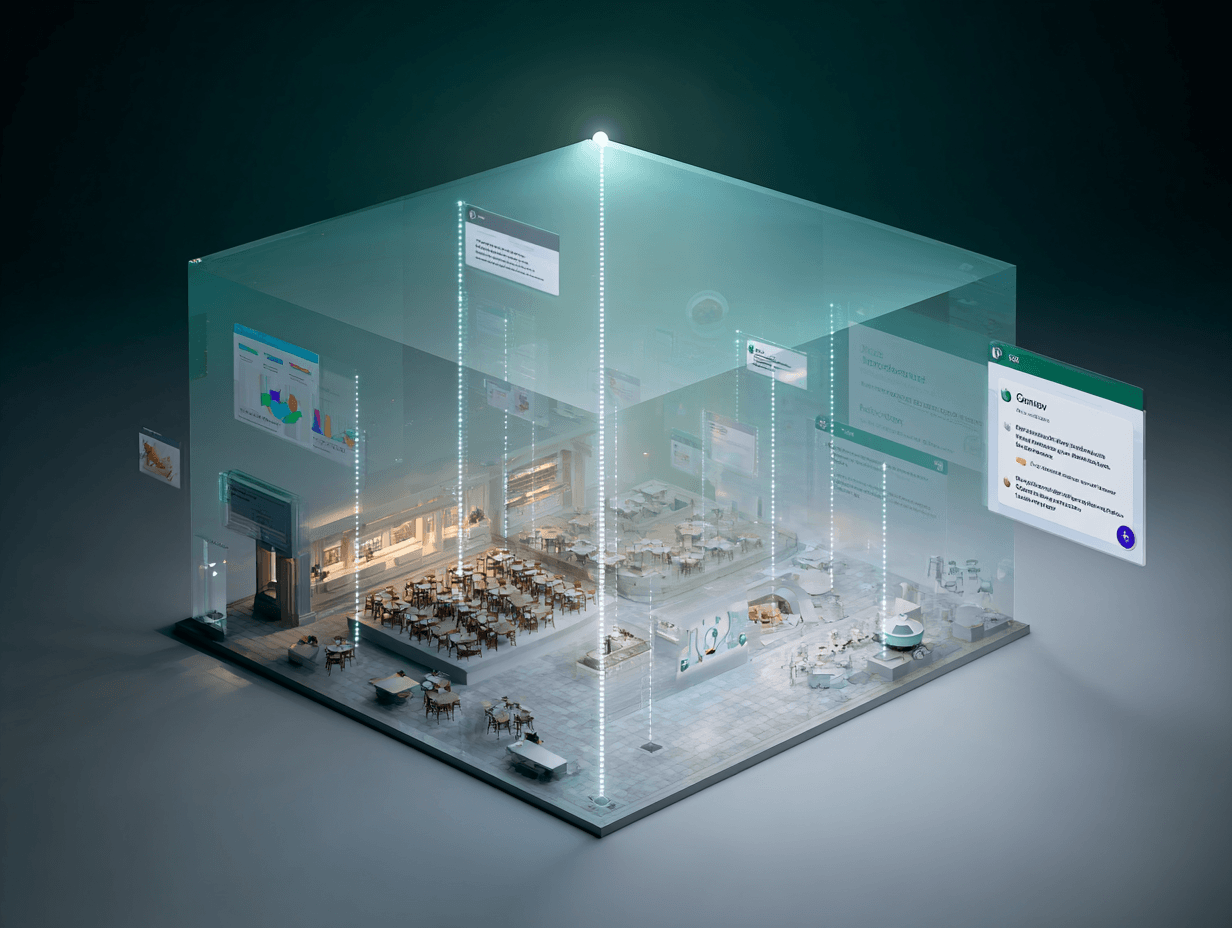
I want to spend a minute on this because I think it’s the part that gets glossed over when people talk about “AI for restaurants.”
The AI model — Claude, ChatGPT, Gemini — is not where the value is. Those models are available to everyone. They’re commoditizing fast. What makes an answer actually useful is what the AI runs on.
That’s the substrate the Intelligence Layer exposes. And that’s the part of OpSage that compounds over time, regardless of which AI client your team uses — or what the next version of that AI can do.
If your team is already working in Claude, ChatGPT, Gemini, or Copilot, connecting OpSage is a single configuration step. One-time OAuth login. No new infrastructure. The MCP server handles the rest.
From there, the intelligence is live. Ask your first question in your AI client of choice. See what it knows about your restaurants.
If you’d like to see it in action, request a demo at opsage.com. We’ll show you OpSage connected to your AI client, answering real operator questions against your own data — not a canned example.
The AI you’re already using is a powerful tool. Give it something worth reasoning over.
 Eric Lehto is the CEO of CONVX, the company behind OpSage — the operational intelligence layer for restaurant chains. OpSage connects every operational system, applies restaurant-tuned intelligence, and delivers it wherever work happens: through the OpSage Application, in your team’s inbox, or embedded as an Intelligence Layer inside the AI tools your company already uses. Connect with Eric on LinkedIn