Trends
Restaurant Data Intelligence Platform
Custom Apps

When a multi-unit restaurant operator evaluates a new analytics or AI platform, I've found that the conversation usually centers on capabilities. How fast can it answer questions? Does it connect to our POS? Can it surface anomalies before they become problems? Those are the right questions to ask, but they’re not the only ones.
There’s a quieter question that doesn’t come up nearly often enough: who is responsible for protecting your data, and how are they doing it?
As operators increasingly rely on AI-powered intelligence to run their businesses, pulling in sales, labor, inventory, customer sentiment, and operational data across dozens or hundreds of locations, the data footprint grows substantially. And with it, so does the risk. The platforms you choose to trust with that data aren’t just analytics tools. They’re custodians of some of your most sensitive business intelligence.
I wrote this piece to show you what to look for, what to ask, and why security isn’t a “nice to have” in a data intelligence partner. It’s a prerequisite.
- Thanks, Mark
Restaurant operators have always managed risk. But the nature of the risk has changed. The industry’s rapid adoption of technology has expanded the attack surface considerably.
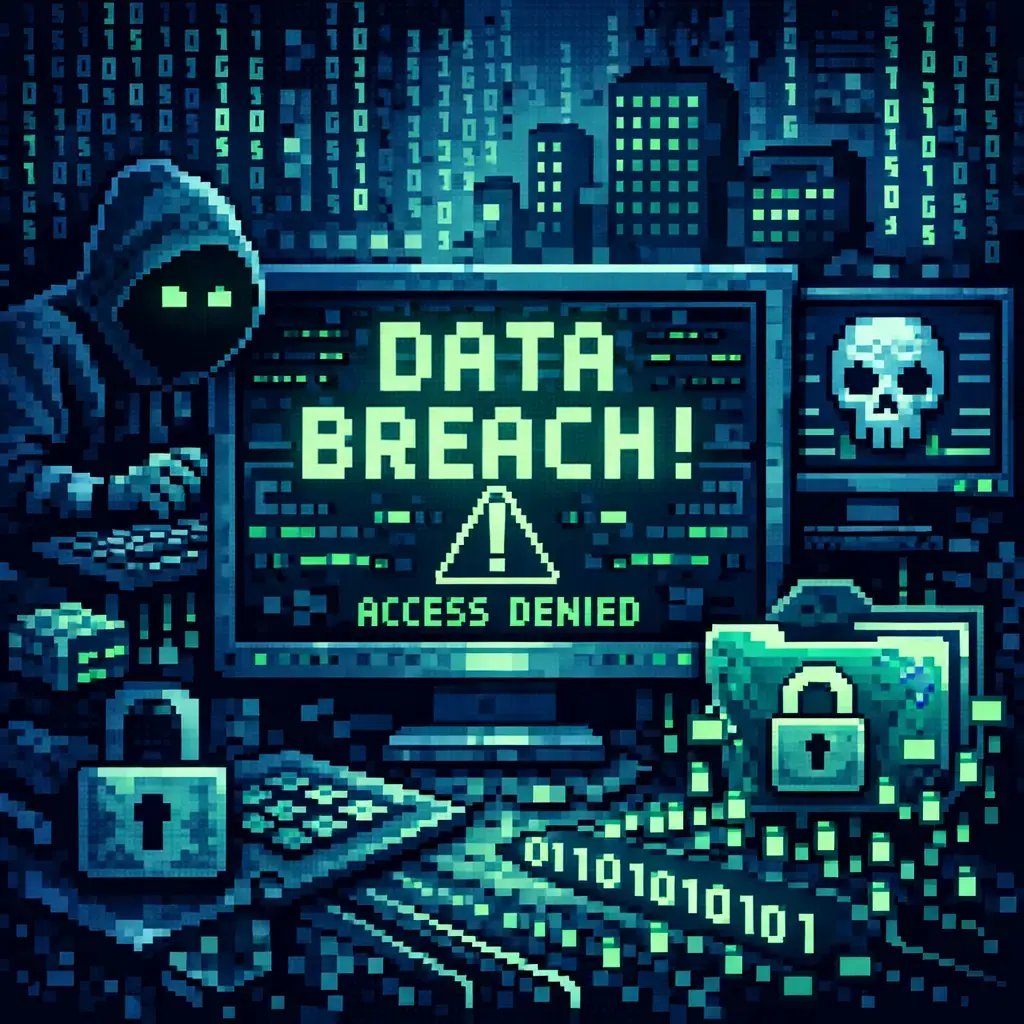
 Cybersecurity threats in foodservice are escalating. In recent years, Panda Restaurant Group, Golden Corral, Krispy Kreme, and others have experienced breaches ranging from unauthorized access to internal systems to ransomware attacks that disrupted online ordering operations. According to IBM’s research, the average cost of a data breach in the hospitality industry now exceeds $2.94 million, and that figure doesn’t capture the reputational damage or the operational disruption that follows.
The threat vectors are multiplying, too. Point-of-sale systems, loyalty platforms, delivery integrations, labor management tools, every connected system is a potential entry point. And third-party vendors sit at the intersection of all of it.
If your data intelligence platform aggregates information from multiple systems — POS, labor, inventory, customer reviews — it’s not just an analytics tool. It’s a concentrated target. That makes the security posture of your vendor a direct concern for your business.
This isn’t a reason to avoid technology. It’s a reason to choose it carefully.
The word “secure” gets used a lot in vendor conversations. It’s worth understanding what it should actually mean when you’re evaluating an AI data intelligence platform for restaurant operations.
The foundation matters. Platforms built on enterprise-grade cloud infrastructure inherit proven security controls that standalone or custom-built solutions often can’t match. Look for vendors who are explicit about what infrastructure powers their platform and what certifications that infrastructure holds.
For reference, OpSage AI is built on Snowflake, one of the most security-hardened data platforms in the enterprise market. Snowflake holds SOC 2 Type II certification — an independent auditor’s attestation of ongoing security, availability, and confidentiality controls — and maintains compliance with HIPAA, PCI DSS, GDPR, and FedRAMP requirements. Data is encrypted using AES-256 at rest and TLS in transit, with continuous monitoring for security risks built into the platform.
That’s not just a footnote. When a platform is built on infrastructure like this, enterprise-grade security isn’t bolted on, it’s inherited from the ground up.
One of the most important questions to ask any vendor: who in my organization can see what? The answer should be granular, configurable, and enforced at the data layer — not just the UI layer.
OpSage AI includes five distinct RBAC roles enforced at the data layer, ensuring that a general manager at a single location sees only what’s relevant to them, while a VP of Operations has visibility across the portfolio. This isn’t just a convenience feature, it’s a fundamental security control that limits data exposure and reduces insider risk. You can explore how this works in the context of AI Chat and cross-domain intelligence.
Strong authentication is a baseline expectation. Look for platforms that leverage modern identity management standards. OpSage AI uses AWS Cognito for authentication, a purpose-built identity and access management service that handles secure user pools, multi-factor authentication, and token-based session management. This is the same infrastructure used by large enterprises and regulated industries to manage user access at scale.
If you’re a multi-unit operator sharing a platform with other restaurant groups, which is common in SaaS environments — you need to know that your data is truly isolated from other tenants. This is not a given. Ask vendors explicitly how they handle data separation, and look for architectures that enforce isolation at the infrastructure level, not just through application logic.
Most vendor conversations move quickly. Security tends to come up late, if at all. Here are the questions that should be front and center when evaluating a data intelligence partner:
A vendor who treats these questions as an inconvenience is telling you something important. The right partner will have direct, documented answers.
There’s a dimension of security that often gets overlooked in platform evaluations: the ongoing operational discipline required to maintain a secure environment.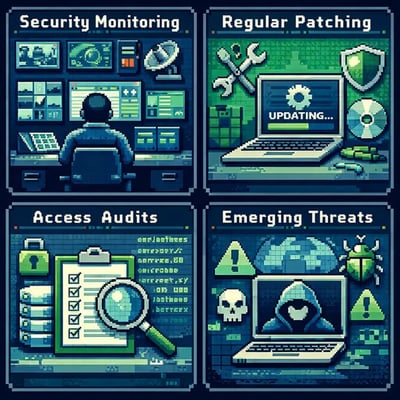
Security isn’t a configuration you set once. It requires continuous monitoring, regular patching, access audits, and responsiveness to emerging threats. Many operators lack the internal IT resources to manage this rigorously, which makes the vendor’s operational model a critical factor.
OpSage AI by CONVX is a fully managed platform. That means CONVX takes direct responsibility for the health, performance, and security of the environment, not just at implementation, but continuously. The managed onboarding and operations model is built so that operators aren’t left to navigate configuration, maintenance, or security hardening on their own.
In a managed model, security isn’t delegated back to the customer. The vendor owns the posture and is accountable for it. That’s a fundamentally different relationship than deploying a self-service tool and hoping your IT team stays on top of it.
This is especially meaningful for multi-unit operators in the 30–300 location range, where internal IT resources are often stretched thin and where the data being managed spans dozens of locations, multiple systems, and significant operational sensitivity.
There’s a subtler argument to make here that often gets missed: security architecture and intelligence quality are related.
A platform that maintains strict data isolation, enforces role-based access, and takes careful control of how data flows through the system is also a platform that is building its intelligence on clean, governed data. The disciplines are complementary.
OpSage AI’s semantic layer, built in YAML with tenant-specific configurations, is an example of this. It’s not just a technical convenience. It’s a governance layer that ensures queries are resolved against accurate, context-aware definitions of your business. The same discipline that produces trustworthy data governance also produces trustworthy insights.
When you trust a platform with your data, you’re trusting it to protect that data and to reason about it correctly. Those two things go together.
The restaurant industry has always operated on trust, between operators and guests, between brands and their teams, between technology partners and the businesses they support. The data relationships being formed today are no different.
When you give a platform access to your sales data, your labor data, your customer sentiment, and your operational patterns, you’re extending a significant degree of trust. That trust should be earned through architectural rigor, operational accountability, and transparency, not assumed.
At CONVX, security-first architecture is an operational reality, reflected in every layer of how OpSage AI is built and managed, from Snowflake’s enterprise compliance certifications to AWS Cognito’s authentication controls to the granular RBAC model that governs what each user can access. Learn more about how OpSage AI works, or reach out to request a demo and see the platform in action.
Your restaurant data is one of your most valuable assets. Make sure you’re choosing a partner who treats it that way.
Visit opsage.com to explore OpSage AI’s capabilities or request a demo to speak with the CONVX team directly.