Short answer: No, a data intelligence platform does not replace your CDP (customer data platform). A CDP like Bikky is built to unify guest identity and power marketing activation. A data intelligence platform like OpSage is built to unify operational data and explain why the business is performing the way it is. They answer different questions. Run them together and the CDP gets sharper.
If you already have a CDP, the question isn’t whether to rip it out. It’s whether your guest data is the only data informing your marketing and operating decisions, or whether it’s working alongside everything else happening in the building.
What a CDP Is Built to Do
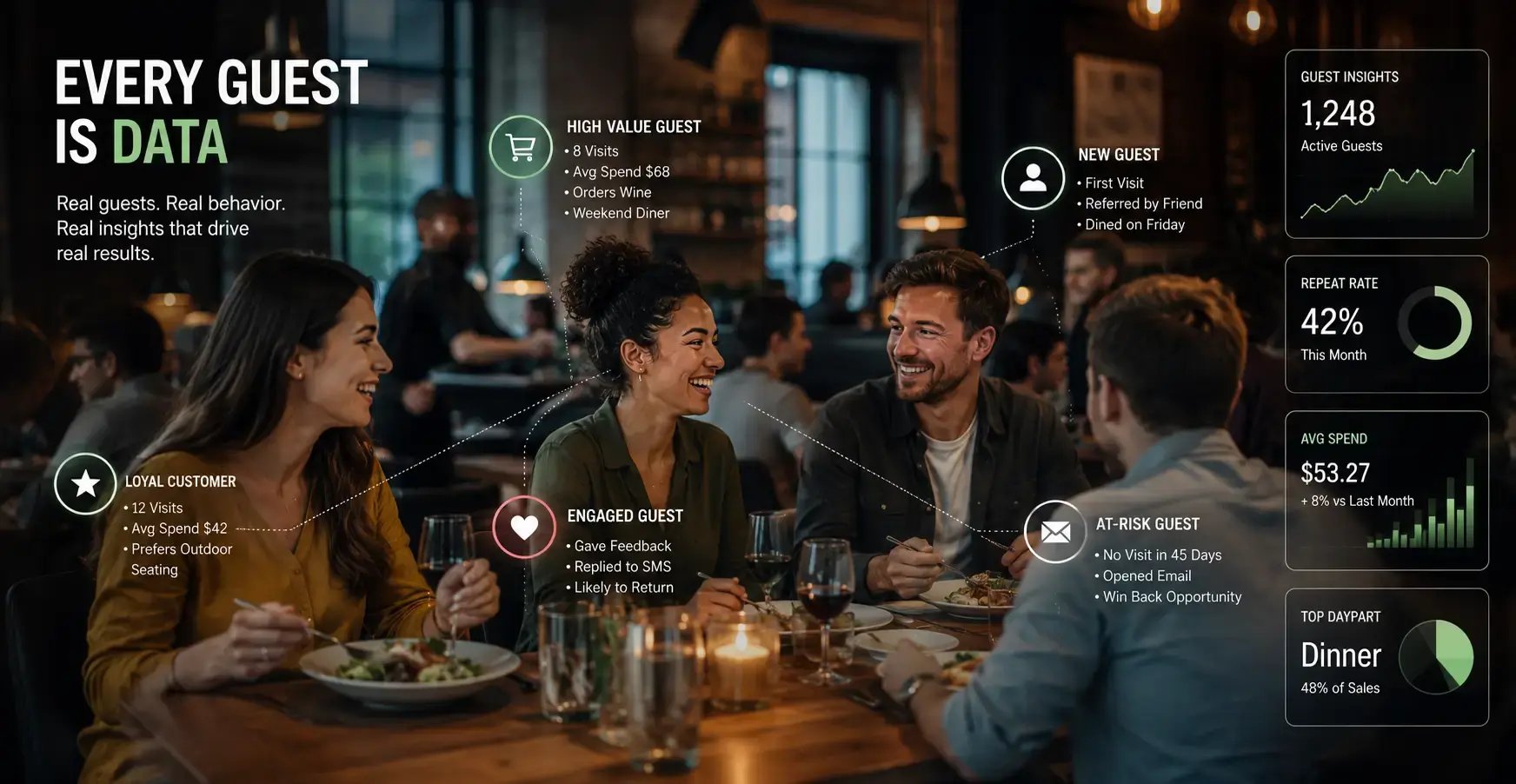
A restaurant CDP like Bikky exists to solve one problem: your guest shows up as five different records across five different systems, and no one can tell you who they actually are. The CDP pulls identity data from POS, online ordering, loyalty, and payment processors, resolves it into one guest profile, and makes that profile usable for marketing.
That work includes:
- Matching guest records across every ordering channel into a single identity
- Tracking visit frequency, spend, and lifetime value per guest
- Segmenting guests for email, SMS, and loyalty campaigns
- Measuring whether a promotion actually changed guest behavior
A CDP answers: who is this guest, and what should we tell them next? That’s a marketing question, and it needs a marketing tool built around identity resolution.
What a Data Intelligence Platform Is Built to Do
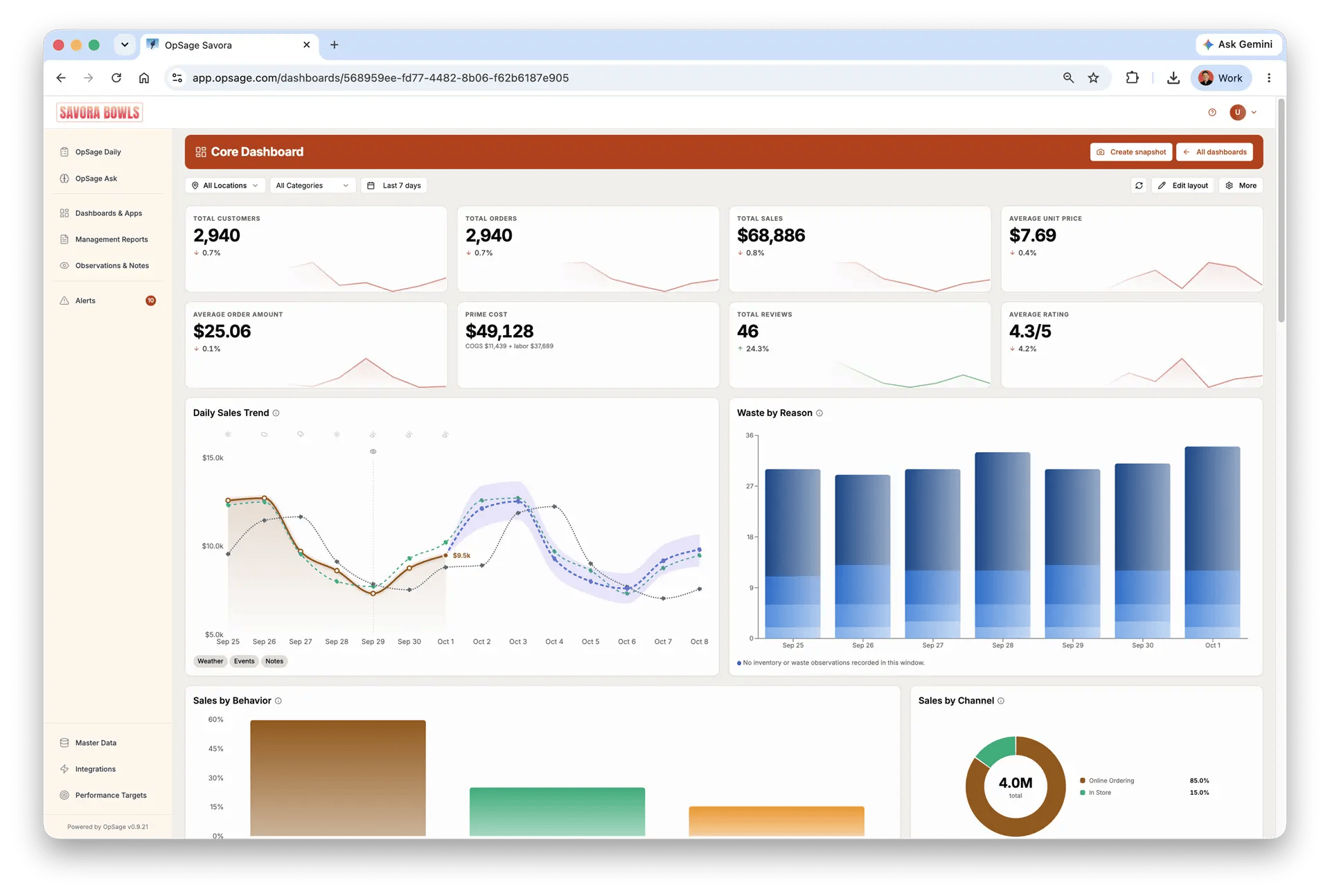
A data intelligence platform like OpSage isn’t trying to solve the identity problem. It’s solving the silo problem on the operations side: sales lives in the POS, labor in the workforce system, inventory in MarketMan or CrunchTime, sentiment across Google and Yelp, weather in its own forecast feed. Each system answers for itself. None of them explain what’s happening across the business as a whole.
OpSage connects those domains and applies AI and ML across all of them at once, so an operator can ask a question like “why did sales drop 25% at Store 42 yesterday” and get a real answer: an ice storm cut traffic, three of five scheduled staff didn’t clock in, and the two factors compounded.
A data intelligence platform answers: why did this happen, and what does it mean for the rest of the business? That’s an operations question, and it needs a tool that can see across every domain at once, not just guest transactions.
Where the Two Categories Differ
| |
CDP (e.g. Bikky) |
Data Intelligence Platform (OpSage) |
| Primary data |
Guest identity: POS, online ordering, loyalty, payments |
Operations: POS, labor, inventory, reviews, weather |
| Core question |
Who is this guest, and what should we send them? |
Why did this happen, and what’s driving it? |
| Output |
Segments, campaigns, guest profiles |
Reports, alerts, root-cause answers, forecasts |
| Primary user |
Marketing and CRM team |
Operations, GM, VP Ops, finance |
How a Data Intelligence Platform Makes Your CDP Better
Your CDP knows what a guest did. It doesn’t know why the restaurant they visited was having a bad day. That gap is where operational data changes what a marketing team can do with a guest profile.
-
It catches churn signals before they show up as churn. A CDP notices when a guest stops ordering. By then it’s already too late to save the visit. OpSage’s sentiment intelligence connects declining reviews at a location to specific causes, like understaffed Friday lunch shifts, weeks before the visit-frequency drop registers in guest data at all.
-
It tells marketing which items are worth promoting. A CDP can tell you a guest bought a burger three times. It can’t tell you that burger is a plowhorse losing money on every sale, or that the reviews mentioning it are trending negative. OpSage’s menu engineering joins sales, cost, and review data, so a loyalty campaign can push the items that are actually good for the business.
-
It protects the guest experience a campaign is about to walk into. A promotion that lands the same week a location had an equipment outage or a staffing gap doesn’t drive loyalty. It drives a bad review. Operational alerts give marketing a way to hold or redirect a send before it makes a guest experience problem worse.
-
It gives the CDP a cleaner record to work from. OpSage rolls up guest and customer records into consistent categories across every location and brand, on the reporting side, without touching your source systems. A cleaner operational picture of who’s ordering what, where, gives the identity resolution work your CDP is already doing more to build on.
None of that replaces guest segmentation, campaign orchestration, or loyalty management. It just means the CDP isn’t working from guest data alone anymore. It’s working from guest data plus an accurate picture of what was actually happening in the restaurant at the time.
Frequently Asked Questions
What’s the difference between a CDP and a data intelligence platform?
A CDP unifies guest identity data for marketing activation. A data intelligence platform unifies operational data (sales, labor, inventory, reviews, weather) to explain performance and support operating decisions. They cover different parts of the business.
Does OpSage replace a CDP like Bikky?
No. OpSage doesn’t manage guest identity, loyalty programs, or marketing campaigns. It runs alongside a CDP, adding the operational context (why sales moved, where service broke down, which menu items are actually profitable) that guest transaction data alone can’t show.
Do I need both a CDP and a data intelligence platform?
Most multi-unit brands eventually do. A CDP without operational context can only react to what a guest already did. A data intelligence platform without guest identity can’t activate a campaign. Together, marketing and operations are working from the same set of facts about the business.
Who typically owns each platform?
A CDP is usually owned by the marketing or CRM team and bought as part of the marketing stack. A data intelligence platform is usually owned by operations, VP-level leadership, or finance, and bought to answer cross-functional questions the marketing stack was never built to handle.
If your CDP is telling you who your guests are but not why your locations perform the way they do, that’s the gap OpSage is built to close. Talk to us about what OpSage sees that your current stack doesn’t, or take a closer look at how the platform connects your operational data.
.jpg?width=1400&height=787&name=OpSage%20Daily%20(1).jpg)