Trends
Operations

FS/TEC turned 30 this year. Personally, I thought there was more excitement this year, than in many years prior. A big turnout with more than 600 operators and about 650 vendors spending three days at the Gaylord Texan in Grapevine, and the AI conversation sounded different from a year ago. Nobody needed a definition anymore. They wanted to know what AI does on a Tuesday night when two cooks call out and the walk-in is short on chicken.
After the NRA Show in May, we wrote that the real AI question for restaurants was just getting started. Grapevine picked up that thread. Four themes stood out, and each one comes with a question you can bring to your next vendor demo. For a longer list, see What to Ask Every AI-Powered Restaurant Intelligence Software Vendor.
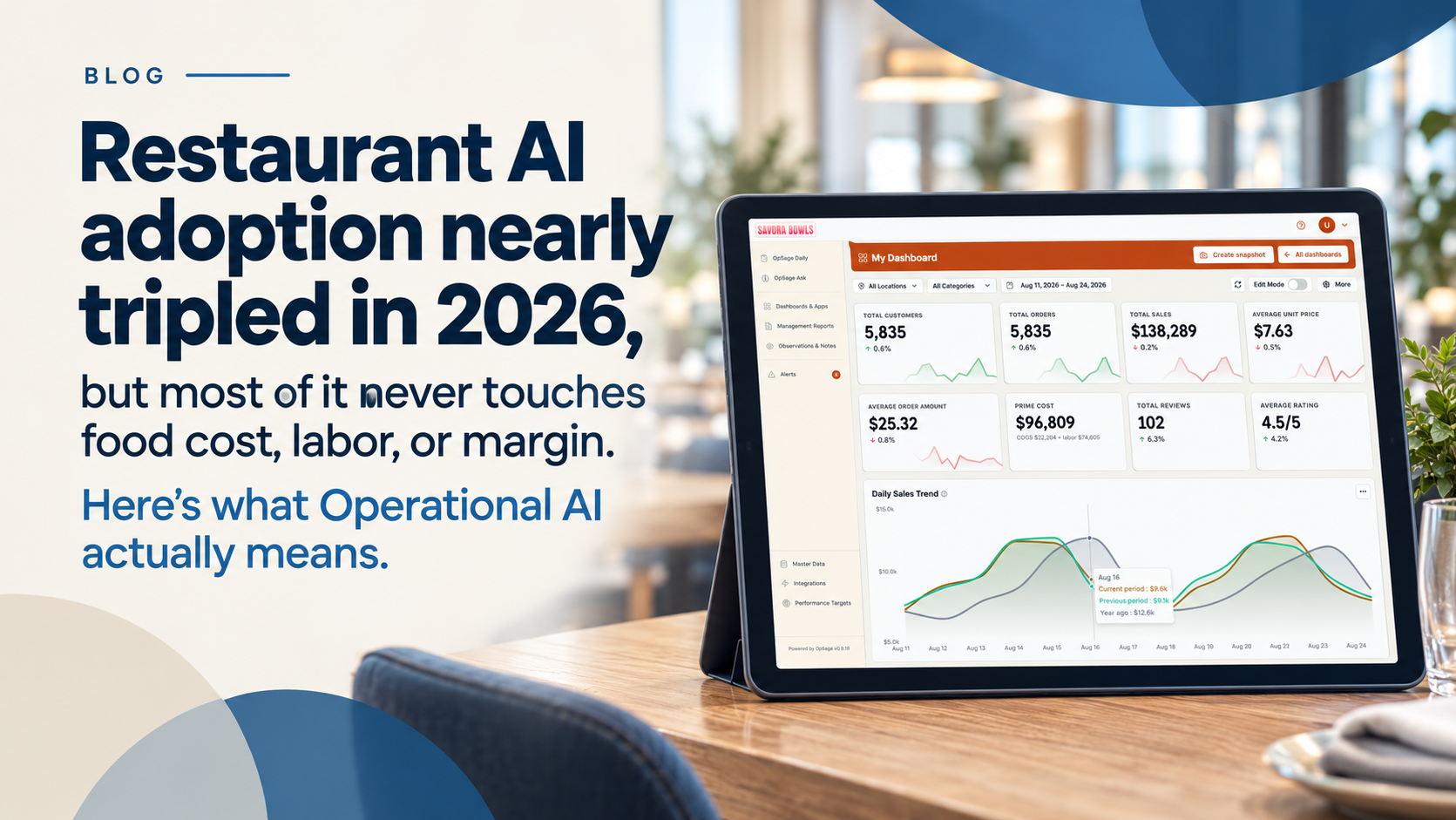
The AI conversations that drew a crowd this year were about the back of house. Vendors showed tools that turn restaurant data into an action plan a floor manager can use before the lunch rush, and menu boards that update across every location the moment a price changes in the POS. Before the show, FS/TEC's own head of content said operators had moved past asking what AI can do. They want measurable results, which matches what we've seen as AI in restaurants moves from experiment to operational reality.
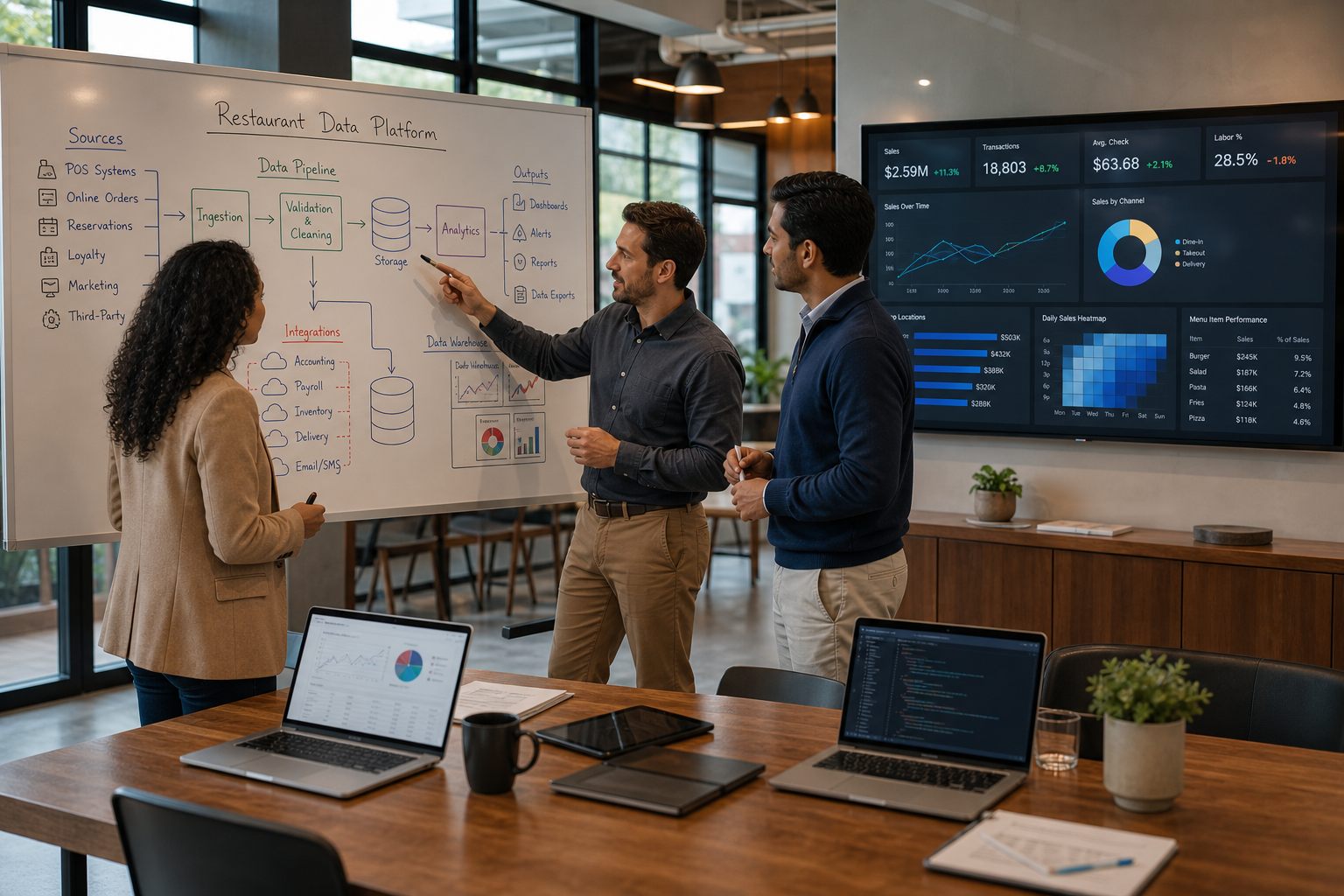
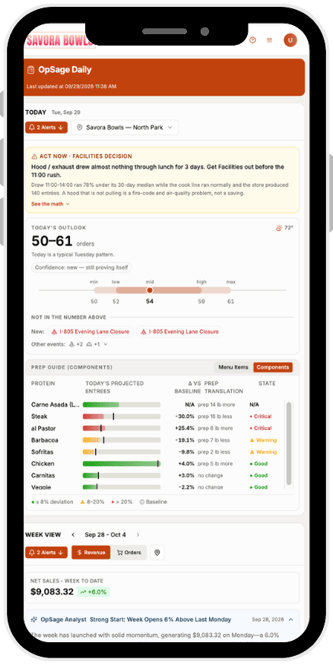 An action plan is only as good as the data behind it. If an AI tool sees only POS sales, it can tell you sales dropped at Store 42. It can't tell you the drop lined up with an ice storm, three front-of-house call-outs, and a week of slow-service reviews, because that answer sits across four different systems. We've called this the disconnected restaurant, and it's the main reason single-system AI stalls. Operational AI connects sales, labor, inventory, reviews, and weather into one model built around your concept, then reasons across all of it at once. The OpSage Restaurant Data Platform is built to do that work.
Question to bring to your next demo: Which of my systems does your AI read, and can it explain a number using more than one of them?
With more than 200 supplier brands in the Marketplace, operators kept voicing the same preference. They want tools that do one job very well and fit into what they already run. Long feature lists read as risk, and so does any product that asks a team to rip out a system that works. We made a similar case about POS "AI-enhanced" tiers versus purpose-built tools.
For insights, depth means restaurant context. A generic assistant can write a query. It doesn't know when lunch starts at your brand, which stores belong to your Omaha region, or how your finance team calculates prime cost. That context has to be built for your organization, and the forecasting and anomaly models behind it should learn from your own locations' history instead of an industry average. None of it works without clean, consistent data underneath. That's what makes an AI analyst that knows your restaurants useful on day one. Depth also means working alongside your current stack. OpSage connects to the POS, labor, inventory, and review systems you already use and leaves the source records untouched.
Question to bring to your next demo: When I ask about "lunch" or "prime cost," whose definition does your AI use?
For all the automation on the floor, operator leaders kept returning to one point. Technology should make a team better at hospitality, not stand in for it.
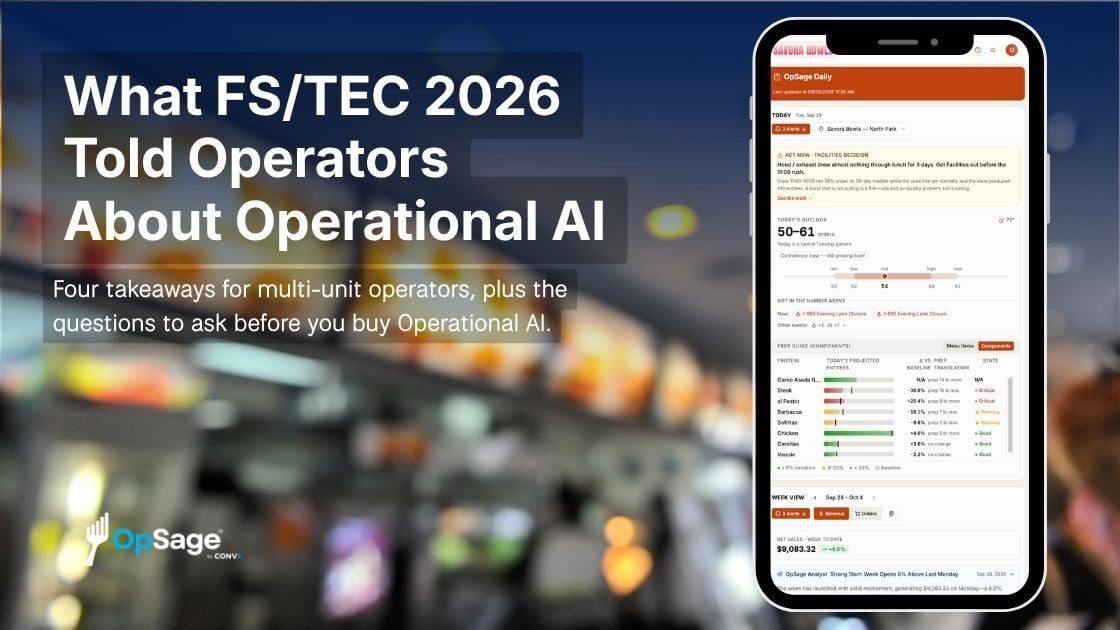
For insight tools, that comes down to respecting a manager's time and a manager's knowledge. A GM shouldn't have to log into another dashboard to learn what happened yesterday. OpSage Daily sends each person a morning briefing written for their stores and their priorities, in their inbox or in Slack. The knowledge side matters just as much. When a GM says "tomatoes were out Tuesday through Thursday," that explanation should attach to the food cost alert it explains and appear in next week's report. That's what operational observations are for. And every person should see what their role allows and nothing more, so a store manager can ask OpSage Ask a direct question without anyone worrying about wage data showing up where it shouldn't.
Question to bring to your next demo: What does my GM get from your AI without logging in, and how does their own knowledge get back into the system?
Exhibitors worked hard for attention this year. The Marketplace had a basketball court, a golf simulator, a custom hat bar, and free tattoos. It made for a lively floor. For operators, though, the lesson sits on the other side of the booth: after three days of demos on clean sample data, most AI tools start to look the same.
The better test is your own data and a question you already know the answer to. Connect your POS, ask why sales dropped last Tuesday at your weakest store, and see whether the answer matches what your district manager told you. OpSage has a free single-location tier for exactly this. Public reviews and weather start flowing as soon as you add a location, so the first answers show up within the hour.
Question to bring to your next demo: Can I test your AI on my own data before I sign?
FS/TEC 2026 didn't debate whether AI belongs in restaurant operations. That argument is over. What the show made clear is the standard operators now hold vendors to. The AI has to read across the systems you already run and use your definitions. It has to make managers faster without asking them to become analysts. And you should be able to test it on your own numbers before you commit.
That's the standard we build OpSage against, whether you license it as a service or have CONVX build it into your own environment. We laid out both paths in Build or Buy a Restaurant Data Platform? Yes.
Paul Molinari is the fractional CMO of OpSage by CONVX.